Imagine a medieval kingdom preparing its defenses against invaders. On one side, you have a group of knights (the Blue Team) who dedicate their time to guarding the castle walls and learning how to repel attacks. On the other side, there's a band of expert attackers within the kingdom's own military (the Red Team) who understand how invaders think and train the knights by launching simulated assaults. Now, picture if these two groups joined forces to share their knowledge, continuously improving both offensive and defensive strategies. This collaborative approach in cybersecurity is known as Purple Teaming.
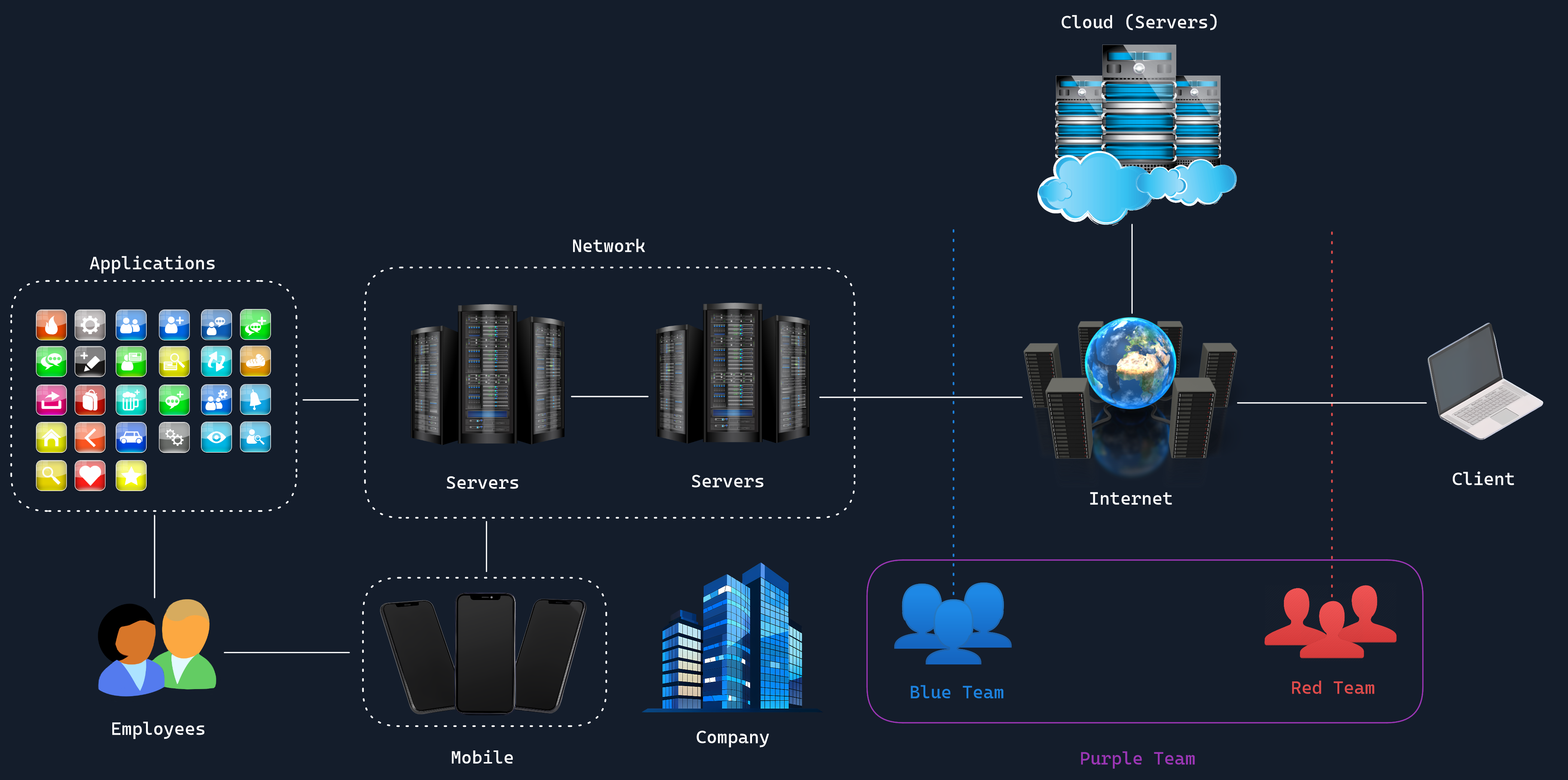
The Purple Team approach brings together the strengths of both Red and Blue Teams. By aligning their activities and encouraging them to work in tandem, organizations can create a more effective and adaptive cybersecurity posture.
Composition of a Purple Team
A Purple Team includes members from both the Red and Blue Teams, such as:
- Penetration Testers / Ethical Hackers (Red Team): Specialists who attempt to break into systems or exploit vulnerabilities, providing insights into how real attackers might operate.
- Incident Responders and Security Analysts (Blue Team): Professionals who detect attacks, respond to security incidents, and mitigate any damage caused.
While these teams traditionally operate separately, the Purple Team approach integrates them, fostering a culture of cooperation.
Purpose
The primary purpose of the Purple Team approach is to enhance an organization's overall security posture through collaboration. By combining the efforts of both offensive and defensive security professionals, organizations aim to:
- Improve Security Defenses: Red Team members share their insights on attack methods, enabling Blue Teams to develop stronger defensive strategies.
- Enhance Detection and Response: Blue Team feedback helps Red Teams refine their attack simulations and tools, leading to more realistic training scenarios.
- Encourage Continuous Improvement: With open communication and shared objectives, Red and Blue Teams continuously refine their methods, ensuring the organization's defenses evolve to meet emerging threats.
Purple Teams strive to achieve the following objectives:
Collaborative Security Testing
The Purple Team approach involves conducting joint exercises where Red Team members simulate attacks while Blue Team members defend the systems in real-time. This direct interaction helps both teams understand each other's techniques and workflows, ultimately leading to more effective security measures.
Knowledge Sharing and Skill Development
By working together, Red and Blue Teams exchange their expertise. Red Team members explain how they identify and exploit vulnerabilities, while Blue Team members share how they detect and respond to attacks. This reciprocal learning process helps each side understand the other’s perspective and improves their overall effectiveness.
Continuous Monitoring and Adaptation
In a dynamic cyber landscape, threats evolve rapidly. The Purple Team approach encourages constant communication and adaptation. Red and Blue Teams jointly monitor the latest cyber threats, vulnerabilities, and defense mechanisms, ensuring that security strategies remain current and effective.
Enhanced Incident Response
With a Purple Team, organizations are better prepared to handle actual security incidents. Since Red and Blue Teams regularly collaborate on simulated attacks, they develop faster, more coordinated responses to real threats. By sharing information and working together, Red and Blue Teams can prioritize their efforts on the most critical vulnerabilities and threats, making the best use of time and resources. This collaborative effort often leads to more focused and efficient security improvements.